
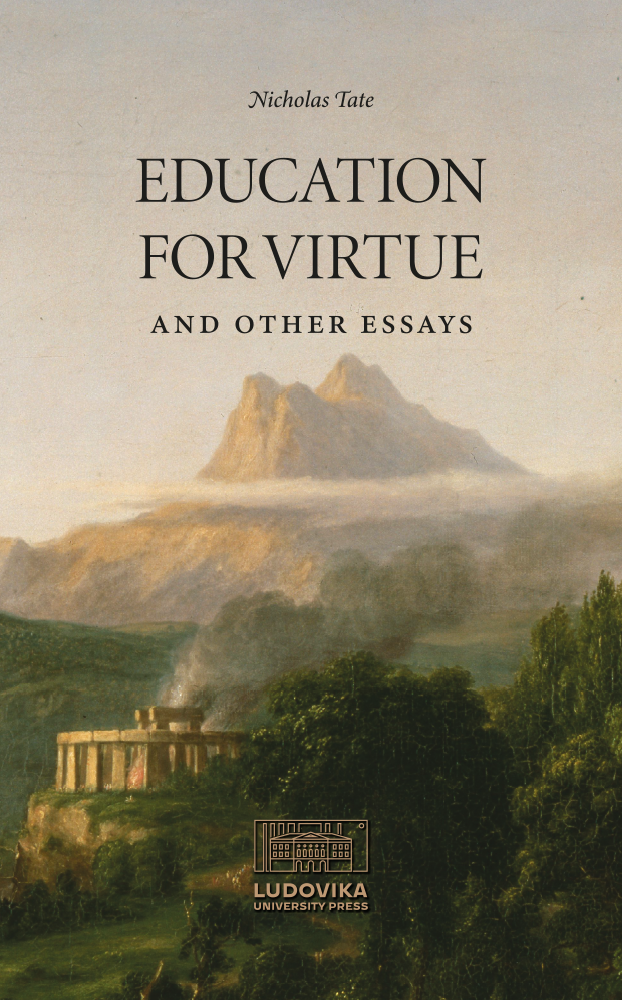
Education for Virtue and Other Essays
Authors
Synopsis
In this book the author, historian and educator, in a selection of his writings over many years, raises fundamental questions about education in schools and universities: What is education for? What role do schools play in transmitting a more than 2,000-year-old civilisation from one generation to the next? Why have we ceased to talk about education for virtue? Is it legitimate for schools to promote a sense of national identity? What is the best way to ensure that the elites emerging from our educational institutions govern for the common good rather than for themselves? Why is learning about the past so important?
These and other issues are addressed through essays, short pieces of journalism, speeches, and articles for scholarly journals. A common thread is the contribution that great thinkers – from Plato and Aristotle to José Ortega y Gasset and Hannah Arendt, many of whom were also teachers themselves – are able to make to educational issues that were as relevant 2,500 years ago as they are today. Nicholas Tate also draws on his own experience to highlight the challenges and opportunities facing educational leaders in trying to maintain a focus on education as a process of self-improvement that may begin in schools but continues throughout life.
Author Biography
A historian who, over a career in education spanning more than fifty years, has been a teacher, headmaster, teacher educator, school and university governor, chief executive of England’s school curriculum and assessment authorities, and adviser to ministers of education in England and France. He has lived and worked in England, Scotland, Spain, France, and Switzerland. He has written widely on educational topics, especially on the history of educational thought in What is Education For? and The Conservative Case for Education, on international education, and, in his latest book, Seven Books that Everyone Once Read and No One Now Does, on the role of great books in people’s lives. His most recent position was as Adviser to the Learning Institute of the Mathias Corvinus Collegium (MCC) in Hungary.
References
Aesop. (1998). The complete fables (O. Temple & R. K. G. Temple, Trans.). Penguin.
Appiah, K. A. (2006). Cosmopolitanism: Ethics in a world of strangers. W. W. Norton.
Arendt, H. (1961a). Between past and future: Six exercises in political thought. Viking Press.
Arendt, H. (1961b). The crisis in education. In H. Arendt, Between past and future: Six exercises in political thought (pp. 173–196). Viking Press.
Arendt, H. (1970). Men in dark times. Jonathan Cape.
Arendt, H. (1978). The life of the mind: Vol. 1. Thinking. Secker & Warburg.
Aristotle (1948). Politics (E. Baker, Trans.). Clarendon Press.
Aristotle (2004). The Nicomachean ethics (J. Barnes, Introd.; J. A. K. Thomson, Trans.). Penguin.
Aristotle (2013). Poetics (A. Kenny, Trans.). Oxford University Press. https://doi.org/10.1093/oseo/instance.00258601
Arnold, M. (1869). Culture and anarchy: An essay in political and social criticism. Smith, Elder, & Co.
Aronofsky Weltman, S. (2016). Sexuality and gender. In F. O’Gorman (Ed.), The Cambridge companion to Ruskin (pp. 157–169). Cambridge University Press. https://doi.org/10.1017/CCO9781107294936.012
Atwood, S. (2011). Ruskin’s educational ideals. Ashgate.
Auden, W. H. (1940). Roman wall blues. In W. H. Auden, Another time: Poems (p. 94). Random House.
Augustine. (1997). The works of Saint Augustine: Vol. 1. The confessions. New City Press.
Badinter, É. (2008). L’infant de Parme. Fayard.
Bagur Taltavull, J. (2015). La Liga de Educación Política Española como instrumento de nación. Tales, 5, 139–157.
Baier, A. C. (1998). Hume on moral sentiments, and the difference they make. In A. Oksenberg Rorty (Ed.), Philosophers on education: New historical perspectives (pp. 227–237). Routledge.
Barber, J. (1979). ‘A’ level history: The consumers’ view. Teaching History, 24, 18–21.
Barbour, R., & Preston, C. (2015). Discursive and speculative writing. In P. Cheney & P. Hardie (Eds.), The Oxford history of classical reception in English literature: Vol. 2. 1558–1660 (pp. 461–487). Oxford University Press.
Barchana-Lorand, D. (2012). A divinity moving you: Knowledge and inspiration in Plato’s Ion. In A. E. Denham (Ed.), Plato on art and beauty (pp. 84–105). Palgrave Macmillan. https://doi.org/10.1057/9780230368187_5
Bawer, B. (2019, November). The ‘global citizen’ fraud. Commentary. https://www.commentary.org/articles/bruce-bawer/the-global-citizen-fraud/
Beach, O. (2017, January 7). Teachers need to step up: They can help to fight the Donald Trump and Brexit reactionary revolution. TES. https://www.tes.com/magazine/archive/teachers-need-step-they-can-help-fight-donald-trump-and-brexit-reactionary-revolution
Beauvoir, S. de. (1958). Mémoires d’une jeune fille rangée. Gallimard.
Beauvoir, S. de. (1960). La Force de l’âge. Gallimard.
Beauvoir, S. de. (1963). La Force des choses. Gallimard.
Benhabib, S. (2000). Arendt’s ‘Eichmann in Jerusalem’. In D. Villa (Ed.), The Cambridge companion to Hannah Arendt (pp. 65–85). Cambridge University Press. https://doi.org/10.1017/CCOL0521641985.004
Bernstein, R. J. (2000). Arendt on thinking. In D. Villa (Ed.), The Cambridge companion to Hannah Arendt (pp. 277–292). Cambridge University Press. https://doi.org/10.1017/CCOL0521641985.015
Betjeman, J. (2006). Collected poems. John Murray.
Biggar, N. (2023). Colonialism: A moral reckoning. William Collins.
Bilewicz, M., & Bilewicz, A. (2012). Who defines humanity? Psychological and cultural obstacles to omniculturalism. Culture & Psychology, 18(3), 331–344. https://doi.org/10.1177/1354067X12446234
Birch, D. (2002). ‘What teachers do you give your girls?’ Ruskin and women’s education. In D. Birch & F. O’Gorman (Eds.), Ruskin and gender (pp. 121–136). Palgrave Macmillan. https://doi.org/10.1057/9780230522480_8
Blais, M.-C., Gauchet, M., & Ottavi, D. (2008). Conditions de l’éducation. Stock.
Blakemore, H. (1970). Latin American studies in British universities: Progress and prospects. Latin American Research Review, 5(3), 111–134. https://doi.org/10.1017/S0023879100040607
Boethius. (2010). The consolation of philosophy (D. R. Slavitt, Trans.). Harvard University Press.
Boghossian, P., & Lindsay, J. (2019). How to have impossible conversations: A very practical guide. Lifelong Books.
Boltanski, L., & Chiapello, È. (1999). Le nouvel esprit du capitalisme. Gallimard.
Booth, M. (1978). Children’s inductive historical thought: An interim report from a current research project. Teaching History, 21, 3–4, 6–8.
Bourdieu, P. (1984). Questions de sociologie. Éditions de Minuit.
Bourdieu, P. (1992). Les règles de l’art: Genèse et structure du champ littéraire. Éditions du Seuil.
Boycott-Owen, M. (2020, June 20). Top private schools plan to ‘decolonise’ syllabuses and reconsider cultures. The Telegraph. https://www.telegraph.co.uk/news/2020/06/20/private-schools-look-decolonise-syllabuses-black-lives-matter/
Burke, E. (2004). Reflections on the revolution in France. Penguin.
Burnham, J. (1943). The Machiavellians: Defenders of freedom. Putnam.
Burnyeat, M. F. (2012). Art and mimesis in Plato’s Republic. In A. E. Denham (Ed.), Plato on art and beauty (pp. 54–71). Palgrave Macmillan. https://doi.org/10.1057/9780230368187_3
Burton, R. (1870). Letters from the battle-fields of Paraguay. Tinsley Brothers.
Cambridge Assessment. (2005, October 17). Cambridge calls together top global experts to debate trust in exams. https://www.cambridgeassessment.org.uk/news/cambridge-calls-together-top-global-experts-to-debate-trust-in-exams/
Carroll, N. (2000). Art and ethical criticism: An overview of recent directions of research. Ethics, 110(2), 350–387. https://doi.org/10.1086/233273
Castillo Martín, M. (2003). De corzas, climas, vegetales y otras feminidades: Ortega y Gasset y la idea de feminidad en los años veinte. España Contemporanea, 16(1), 39–57.
Césaire, A. (2005). Nègre je suis, nègre je resterai. Albin Michel.
Churchill, W. (1930). My early life. Butterworth.
Cicero, M. T. (2000). On obligations (P. G. Walsh, Trans.). Oxford University Press.
City of London School. (2022, June 13). The Pride flag is flying high at CLS. https://www.cityoflondonschool.org.uk/news/latest-news/1144-the-pride-flag-is-flying-high-at-cls
Clarke, V., & Ferrer, M. de. (2023, December 7). Ruth Perry: Ofsted inspection ‘contributed’ to head teacher’s death. BBC. https://www.bbc.com/news/education-67639942
Coalition to Honour All Learning. (n.d.). École Internationale de Genève. https://honouralllearning.ecolint.ch/home
Cobb, R. (1969). A second identity: Essays on France and French history. Oxford University Press.
Cobb, R. (1970). The police and the people: French popular protest, 1792–1802. Clarendon Press.
Cobb, R. (1972). Reactions to the French Revolution. Oxford University Press.
Cobb, R. (1975a). A sense of place. Duckworth.
Cobb, R. (1975b). Paris and its provinces, 1792–1802. Oxford University Press.
Cobb, R. (1976). Tour de France. Duckworth.
Cobb, R. (1978). Death in Paris: The records of the Basse-Geôle de la Seine, October 1795 – September 1801, Vendémiaire Year IV – Fructidor Year IX. Oxford University Press.
Cobb, R. (1980a). Promenades: A historian’s appreciation of modern French literature. Oxford University Press.
Cobb, R. (1980b). The streets of Paris (with photographs by N. Breach). Duckworth.
Codd, T. (2024, March 5). Fury as Exeter School scraps names of Walter Raleigh and Francis Drake from buildings. Devon Live. https://www.devonlive.com/news/devon-news/fury-exeter-school-scraps-names-9140171
Colish, M. L. (1978). Cicero’s De officiis and Machiavelli’s Prince. Sixteenth Century Journal, 9(4), 81–93. https://doi.org/10.2307/2540045
Collard, C., & Cropp, M. J. (Eds.) (2008). Euripides: Fragments (Vols. 1–2). Harvard University Press.
Conrad, J. (1904). Nostromo: A tale of the seaboard. Harper & Bros.
Cook, E. T. (1918). Literary recreations. Macmillan.
Cook, E. T., & Wedderburn, A. (Eds.). (1903–1912). The complete works of John Ruskin. George Allen. https://www.lancaster.ac.uk/the-ruskin/the-complete-works-of-ruskin/
Council of International Schools. (2020). Socially responsible leadership. https://www.cois.org/about-cis/global-citizenship
Cowling, M. (1990). Mill and liberalism. Cambridge University Press. https://doi.org/10.1017/CBO9780511558412
Cumiskey, L. (2024, January 27). Michaela insists it does meet daily worship laws. Schools Week. https://schoolsweek.co.uk/michaela-insists-it-does-meet-daily-worship-laws/
Dadlez, E. M. (2006). Spectacularly bad: Hume and Aristotle on tragic spectacle. Journal of Aesthetic and Art Criticism, 63(4), 351–358. https://doi.org/10.1111/j.0021-8529.2005.00217.x
Davies, B. (1992). The thought of Thomas Aquinas. Oxford University Press. https://doi.org/10.1093/0198267533.001.0001
Debord, G. (2006). Œuvres. Gallimard.
Debray, R. (2010). Éloge des frontières. Gallimard.
Delsol, C. (2003). Icarus fallen: The search for meaning in an uncertain world. ISI Books.
Deneen, P. (2018). Why liberalism failed. Yale University Press. https://doi.org/10.12987/yale/9780300223446.001.0001
Deneen, P. (2023). Regime change: Towards a postliberal future. Forum.
Destrée, P. (2012). Plato on tragic and comic pleasures. In A. E. Denham (Ed.), Plato on art and beauty (pp. 125–141). Palgrave Macmillan. https://doi.org/10.1057/9780230368187_7
Dewey, J. (1916). Democracy and education: An introduction to the philosophy of education. Macmillan.
Diffey, T. J. (1985). Tolstoy’s ‘What is art?’ Croom Helm.
Dolan, F. M. (2000). Arendt on philosophy and politics. In D. Villa (Ed.), The Cambridge companion to Hannah Arendt (pp. 261–276). Cambridge University Press. https://doi.org/10.1017/CCOL0521641985.014
Donne, J. (1959). Devotions upon emergent occasions: Together with Death’s duel. University of Michigan Press. https://doi.org/10.3998/mpub.6642
Dooley, M. (Ed.). (2011). The Roger Scruton reader. Continuum.
Dower, N. (2003). An introduction to global citizenship. Edinburgh University Press. https://doi.org/10.1515/9781474467834
Dugan, C. N., & Strong, T. B. (2001). Music, politics, theater, and representation in Rousseau. In P. Riley (Ed.), The Cambridge companion to Rousseau (pp. 329–364). Cambridge University Press. https://doi.org/10.1017/CCOL9780521572651.012
Dumézil, B. (2008). La reine Brunehaut. Fayard.
Eagles, S. (2015). Political legacies. In F. O’Gorman (Ed.), The Cambridge companion to John Ruskin (pp. 249–262). Cambridge University Press. https://doi.org/10.1017/CCO9781107294936.018
Eagles, S. (2018). Souls of good quality. In V. Purton (Ed.), John Ruskin and nineteenth-century education (pp. 31–48). Anthem Press. https://doi.org/10.2307/j.ctv1t8c98
Eatwell, R., & Goodwin, M. (2018). National populism: The revolt against liberal democracy. Pelican.
Education for good: Symposium proceedings (2000). St Gabriel’s Trust, Culham College Institute.
Education Week Research Center. (2017). Educator political perceptions: A national survey. https://www.edweek.org/media/educator-political-perceptions-education-week-12-12-2017.pdf
Edwards, A. D. (1978). The language of history and the communication of historical knowledge. In A. K. Dickinson, & P. J. Lee (Eds.), History teaching and historical understanding (pp. 54–71). Heinemann.
Eels, E. (2002). Images of Proustian inversion from Ruskin. In D. Birch & F. O’Gorman (Eds.), Ruskin and gender (pp. 177–200). Palgrave Macmillan. https://doi.org/10.1057/9780230522480_11
Eldridge, R. (2003). An introduction to the philosophy of art. Cambridge University Press. https://doi.org/10.1017/CBO9781139164740
Eliot, T. S. (1936). Essays ancient and modern. Faber & Faber.
Eliot, T. S. (1953). Modern education and the classics. In T. S. Eliot, Selected prose (pp. 221–222). Penguin.
Eliot, T. S. (1959). East Coker. In T. S. Eliot, Four quartets (pp. 23–32). Faber & Faber.
Eliot, T. S. (1962). Notes towards the definition of culture. Faber & Faber.
Elton, G. R. (1967). The practice of history. Harper Collins.
Elton, G. R. (1980, January 11). Quick solutions for fearful minds. Times Educational Supplement, 20.
Enkvist, I. (2012). La filosofía de la educación de Ortega y Gasset: Una crítica indirecta a las modas pedagógicas de hoy. Revista Internacional de Technología, Ciencia y Sociedad, 1(1), 81–90. https://doi.org/10.37467/gka-revtechno.v1.29
Enslin, P. (1999). The place of national identity in the aims of education. In R. Marples (Ed.), The aims of education (pp. 100–111). Routledge.
Faas, E. (2002). The genealogy of aesthetics. Cambridge University Press.
Fahrmeir, A. (2007). Citizenship: The rise and fall of a modern concept. Yale University Press.
Farrell, A. P. (Ed. & Trans.). (1970). The Jesuit Ratio Studiorum of 1599. Conference of Major Superiors of Jesuits.
Fedi, L. (2011). La chouette et l’encrier: Promenades dans les philosophies françaises de l’éducation. Éditions Kimé.
Fernández Escalante, M. (2001). Ortega y las mujeres: Dichos y hechos. Barataria: Revista Castellano-Manchega de Ciencias Sociales, 4, 203–221. https://doi.org/10.20932/barataria.v0i4.277
Ferrari, G. R. F. (2012). The philosopher’s antidote. In A. E. Denham (Ed.), Plato on art and beauty (pp. 106–124). Palgrave Macmillan. https://doi.org/10.1057/9780230368187_6
Fieldhouse, D. K. (1961). ‘Imperialism’: An historiographical revision. Economic History Review, 14(2), 187–209. https://doi.org/10.2307/2593218
Finkielkraut, A. (2009). Un cœur intelligent. Stock; Flammarion.
Forster, E. M. (1957). Howards End. Penguin.
Fukuyama, F. (1996). Trust: The social virtues and the creation of prosperity. Simon & Schuster.
Furedi, F. (2019, December 23). Why age is the new dividing line in politics. Spiked. https://www.spiked-online.com/2019/12/23/why-age-is-the-new-dividing-line-in-politics/
Furedi, F. (2021). Why borders matter: Why humanity must relearn the art of drawing boundaries. Routledge. https://doi.org/10.4324/9780367815684
Furedi, F. (2022, April 15). The twilight of globalism: This anti-democratic ideology is unravelling before our eyes. Spiked. https://www.spiked-online.com/2022/04/15/the-twilight-of-globalism/
Furedi, F. (2024). The war against the past: Why the West must fight for its history. Polity.
Gardner, H. (2005). Five minds for the future. Harvard Business Press.
Gilbert, M. (2002). The Righteous: The unsung heroes of the Holocaust. Black Swan.
Gimpel, J. (1991). Contre l’art et les artistes. Editions Universitaires.
Godfrey, J. (2014). Does global citizenship really exist? International School, 17(1), 5–7.
Goleman, D. (2020). Emotional intelligence. Bloomsbury.
Goodhart, D. (2017). The road to somewhere: The new tribes shaping British politics. Penguin.
Goodson, I. (1978). New views of history: From innovation to implementation. In A. K. Dickinson, & P. J. Lee (Eds.), History teaching and historical understanding (pp. 39–53). Heinemann.
Goodwin, M. (2023). Values, voice and virtue: The new British politics. Penguin.
Goodwin, M. (2024a, April 10). Shocking: What British Muslims think. https://www.mattgoodwin.org/p/shocking-what-british-muslims-think
Goodwin, M. (2024b, May 1). Who are we? British identity in 2024. https://www.mattgoodwin.org/p/who-are-we-british-identity-in-2024
Gracia, J. (2014). José Ortega y Gasset. Santillana.
Gracq, J. (1989). Le rivage des Syrtes. Corti.
Gramsci, A. (1996). Prison letters (H. Hamish, Trans.). Pluto Press.
Gray, J. (1997). Endgames: Questions in late modern political thought. Polity.
Gray, J. (1998). False dawn: The delusions of global capitalism. Granta.
Gray, J. (2023). The new Leviathans: Thoughts after liberalism. Allen Lane.
Greene, D. (Ed.). (1986). The Oxford authors: Samuel Johnson. Oxford University Press.
Greene, R. (2000). The 48 laws of power. Profile Books.
Hacking, I. (2007). Kinds of people: Moving targets. Proceedings of the British Academy, 151, 281–318. https://doi.org/10.5871/bacad/9780197264249.003.0010
Hamilton, E., & Cairns, H. (Eds.). (1961). The collected dialogues of Plato. Princeton University Press. https://doi.org/10.2307/j.ctt1c84fb0
Hardman, R. (2014, October 30). Why do the Left despise patriotism? Daily Mail.
Haro Honrubia, A. de. (2020). Claves filosóficas de la pedagogía en la obra de Ortega. Daimon: Revista Internacional de Filosofía, 79, 133–146. https://doi.org/10.6018/daimon.313241
Hastie, T. (1979, November 30). Who’s afraid of historical content? Times Educational Supplement, 32.
Hayden, M., & Thompson, J. (2016). International schools: Current issues and future prospects. Symposium Books.
Hazony, J. (2018). The virtue of nationalism. Basic Books.
Heater, D. (1996). World citizenship and government: Cosmopolitan ideas in the history of Western political thought. Palgrave Macmillan. https://doi.org/10.1057/9780230376359
Helman, E. F. (1951). On Humanizing Education: Ortega’s Institute of Humanities, Madrid 1948–50. Hispania, 34(1), 47–50. https://doi.org/10.2307/333166
Highet, G. (2008). The classical tradition: Greek and Roman influences on Western literature. Oxford University Press.
Hill, A. (2019). Ruskinland: How John Ruskin shapes our world. Pallas Athene.
Hilton, T. (1985). John Ruskin: The early years, 1819–1859. Yale University Press.
Hilton, T. (2000). John Ruskin: The later years. Yale University Press.
Hirsch, E. D. (1987). Cultural literacy: What every American needs to know. Houghton Mifflin.
Holmes, O. (2022). José Ortega y Gasset. In E. N. Zalta (Ed.), Stanford encyclopedia of philosophy. https://plato.stanford.edu/entries/gasset/
Hudson, W. H. (1958). William Henry Hudson’s diary concerning his voyage from Buenos Aires to Southampton on the Ebro, from 1 April 1874 to 3 May 1874, written to his brother, Albert Merriam Hudson. Westholm.
Hughes, C. (2019). International education and capitalism. International Schools Journal, 39(1), 33–38.
Hughes, C. (2021). Education and elitism: Challenges and opportunities. Routledge. https://doi.org/10.4324/9781003058373
Hume, D. (1975). An enquiry concerning the principles of morals (L. A. Selby-Bigge, Ed.). Oxford University Press.
Hume, D. (1987). Essays moral, political and literary (E. F. Miller, Ed.). Liberty Fund.
Hunt, R. (1974). Latin America: A critical analysis of teaching materials. Hispanic and Luso-Brazilian Council.
Huxley, T. H. (1909). A liberal education (1868). In T. H. Huxley, Autobiography and selected essays (pp. 35–43). Houghton Mifflin. https://doi.org/10.5962/bhl.title.21801
Inglis, W. F. J. (1979). A content analysis of GCE and SCE papers on economic and social history. History Teaching Review, 11(2), 23–27.
Inglis, W. F. J. (1981). A content analysis of ‘O’ and ‘A’ level papers set by GCE examination boards. Teaching History, 29, 20–22.
International Baccalaureate Organization. (2013). IB learner profile. https://www.ibo.org/contentassets/fd82f70643ef4086b7d3f292cc214962/learner-profile-en.pdf
International Organization for Migration. (2020). The world migration report 2020. https://worldmigrationreport.iom.int/wmr-2020-interactive/
International School of Geneva (2014). Ecolint: A history of the International School of Geneva. Ecolint.
Isenberg, G. (2016). Identity: The necessity of a modern idea. University of Pennsylvania Press.
Jaspers, K. (1959). The idea of the university. Beacon Press.
Johnston, N., & Wood, P. (2025, March 18). GCSE exams could be cut back to reduce pupil stress. Telegraph. https://www.telegraph.co.uk/news/2025/03/18/gcse-exams-could-be-cut-back-to-reduce-pupil-stress/
Jones, J. (2014a, October 28). The Tower of London poppies are fake, trite and inward-looking: A Ukip-style memorial. The Guardian. https://www.theguardian.com/artanddesign/jonathanjonesblog/2014/oct/28/tower-of-london-poppies-ukip-remembrance-day
Jones, J. (2014b, October 31). History and all its grisly facts are worth more than the illusion of memory. The Guardian. https://www.theguardian.com/commentisfree/2014/oct/31/world-war-one-poppies-memorial-cameron
Kant, I. (1879). Critique of practical reason (T. Kingsmill Abbott, Trans.). Longmans, Green, & Co.
Kant, I. (2007). Lectures on pedagogy (R. B. Louden, Trans.). In R. B. Louden & G. Zöller (Eds. & Trans.), Anthropology, history and education (pp. 434–485). Cambridge University Press. https://doi.org/10.1017/CBO9780511791925.020
The key of heaven: A selection of prayers and devotional exercises for the use of Catholics – including new prayers to Saint Therese, the Little Flower of Jesus (c. 1933). Laverty & Sons.
Keynes, J. M. (1936). The general theory of employment, interest and money. Macmillan.
Kipling, R. (1906). On the great wall. In R. Kipling, Puck of Pook’s Hill (pp. 149–172). Doubleday.
Kodz, J., Atkinson, J., Hillage, J., Maginn, A., & Perryman, S. (1997). Employers’ use of the National Record of Achievement [Report Summary]. https://www.employment-studies.co.uk/system/files/resources/files/328.pdf
Kolakowski, L. (1990). Modernity on endless trial (S. Czerniawski, W. Freis, & A. Kolakowska, Trans.). University of Chicago Press. https://doi.org/10.7208/chicago/9780226217406.001.0001
Kotkin, J. (2014). The new class conflict. Telos.
Lampedusa, G. T. di. (1958). Il Gattopardo. Feltrinelli.
Lasaga Medina, J. (Ed.). (2012). José Ortega y Gasset. Editorial Gredos.
Lasch, C. (1984). The minimal self: Psychic survival in troubled times. W. W. Norton. https://doi.org/10.3817/1284062223
Lasch, C. (1994). The revolt of the elites and the betrayal of democracy. W. W. Norton.
Leavis, F. R. (1943). Education and the university: A sketch for an ‘English’ school. Chatto & Windus.
Lewin, D. (2022). Indoctrination. Journal of Philosophy of Education, 56(4), 612–626. https://doi.org/10.1111/1467-9752.12668
Lewis, C. S. (1943). The abolition of man. Oxford University Press.
Lieven, A. (2020). Uniting nations. RSA Journal, 166(1), 10–15.
Lind, M. (2020). The new class war: Saving democracy from the metropolitan elite. Atlantic Books.
Locke, J. (1989). Some thoughts concerning education (J. W. Yolton, & J. S. Yolton, Eds.). Clarendon Press.
Lockhart, J., & Otte, E. (1976). Letters and people of the Spanish Indies: Sixteenth century. Cambridge University Press. https://doi.org/10.1017/9780511810145
Lombardi, J. V. (1979). Detail and the grand design in history: A review of Politics, Economics, and Society in Argentina in the Revolutionary Period by T. Halperin-Donghi. Latin-American Research Review, 14(2), 223–226. https://doi.org/10.1017/S002387910003209X
Low-Beer, A. (1974). Books and the teaching of history in school. History: Journal of the Historical Association, 59(197), 392–404. https://doi.org/10.1111/j.1468-229X.1974.tb02224.x
Lukianoff, G., & Haidt, J. (2018). The coddling of the American mind: How good intentions and bad ideas are setting up a generation for failure. Allen Lane.
Maalouf, A. (1998). Les identités meurtrières. Grasset.
Maalouf, A. (2009). Le dérèglement du monde. Grasset.
MacCormack, S. (1998). The shadows of poetry: Vergil in the mind of Augustine. University of California Press. https://doi.org/10.2307/jj.5973151
MacIntyre, A. (1984). Is patriotism a virtue? The Lindley lecture. University of Kansas.
MacIntyre, A. (1998). Aquinas’s critique of education: Against his own age, against ours. In A. Oksenberg Rorty (Ed.), Philosophers on education: New historical perspectives (pp. 95–108). Routledge.
Marples, R. (Ed.). (1999). The aims of education. Routledge.
Marsh, J. (2018). Mad governors or wise counsellors: Sesame and Lilies revisited. In V. Purton (Ed.), John Ruskin and nineteenth-century education (pp. 69–80). Anthem Press. https://doi.org/10.2307/j.ctv1t8c98
Maskell, D., & Robinson, I. (2001). The new idea of a university. Haven Books.
McKenzie, M. (2011). Reflections and refractions: Faces for our changing future. In G. Walker (Ed.), The changing face of international education (pp. 159–178). International Baccalaureate.
Mehta, U. (1969). Gandhi, Tolstoy and Ruskin. The Indian Journal of Political Science, 30(4), 343–349.
Mill, J. S. (1867). Inaugural address delivered to the University of St Andrew’s. Longmans, Green, Reader, & Dyer.
Mill, J. S. (2023). On liberty. Grapevine.
Milton, J. (1644). Of education. The John Milton Reading Room – Dartmouth College. https://milton.host.dartmouth.edu/reading_room/of_education/text.shtml
Montaigne, M. de. (1991). The essays of Michel de Montaigne (M. Screech, Trans.). Penguin.
Morrison, K. F. (1983). Incentives for studying the liberal arts. In D. L. Wagner (Ed.), The seven liberal arts in the middle ages (pp. 32–57). Indiana University Press.
Muray, P. (2010). Essais. Belles Lettres.
Murdoch, I. (1992). Metaphysics as a guide to morals. Chatto & Windus.
Murray, D. (2017). The strange death of Europe: Immigration, identity, Islam. Bloomsbury.
Murray, D. (2019). The madness of crowds: Gender, race and identity. Bloomsbury.
Nadler, J.-A. (2023, May). Show, tell and leave nothing to the imagination: How critical social justice is undermining British schooling. Civitas. https://www.civitas.org.uk/publications/show-tell-and-leave-nothing-to-the-imagination/
Naylor, B. (1969). Accounts of nineteenth-century South America: An annotated checklist of works by British and United States observers. Athlone Press.
Newman, J. H. (1852/1996). The idea of a university. Yale University Press.
Newman, J. H. (1852/2008). The idea of a university defined and illustrated: In nine discourses delivered to Catholics in Dublin. Gutenberg Ebook. https://www.gutenberg.org/files/24526/24526-pdf.pdf
Nietzsche, F. (1996). On the genealogy of morals (D. Smith, Trans.). Oxford University Press.
Nussbaum, M. (1994). Patriotism and cosmopolitanism. Boston Review, 19(5).
Nussbaum, M. (2010). Not for profit: Why democracy needs the humanities. Princeton University Press.
O’Brien, D. (2010). Measuring the value of culture: A report to the Department for Culture Media and Sport. Department for Culture Media and Sport.
O’Gorman, F. (2017). Forgetfulness: Making the modern culture of amnesia. Bloomsbury. https://doi.org/10.5040/9781501324727
O’Hear, A. (2023). In defence of liberal education. University of Buckingham Press.
Oakeshott, M. (1989). The idea of a university, 1950. In T. Fuller (Ed.), The voice of liberal learning (pp. 95–104). Yale University Press. https://doi.org/10.2307/j.ctt1xp3tm1
Ortega y Gasset, J. (1906/2004a). La universidad española y la universidad alemana. In J. Ortega y Gasset, Obras completas: Vol. 1 (pp. 72–77). Santillana.
Ortega y Gasset, J. (1906/2004b). La pedagogía del paisaje. In J. Ortega y Gasset, Obras completas: Vol. 1 (pp. 99–103). Santillana.
Ortega y Gasset, J. (1906/2007). Discurso para los juego florales de Valladolid. In J. Ortega y Gasset, Obras completas: Vol. 7 (pp. 81–90). Santillana.
Ortega y Gasset, J. (1910/2004a). Al margen del libro ‘A. M. D. G.’ In J. Ortega y Gasset, Obras completas: Vol. 2 (pp. 112–115). Santillana.
Ortega y Gasset, J. (1910/2004b). La pedagogía social como programa político. In J. Ortega y Gasset, Obras completas: Vol. 2 (pp. 86–102). Santillana.
Ortega y Gasset, J. (1913/2004). Prospecto de la Liga de Educación Política Española. In J. Ortega y Gasset, Obras completas: Vol. 1 (pp. 738–744). Santillana.
Ortega y Gasset, J. (1913/2007). La hora del maestro. In J. Ortega y Gasset, Obras completas: Vol. 7 (pp. 338–340). Santillana.
Ortega y Gasset, J. (1914/2004a). Meditaciones del Quijote. In J. Ortega y Gasset, Obras completas: Vol. 1 (pp. 747–825). Santillana.
Ortega y Gasset, J. (1914/2004b). Prológo a Pedagogía general derivada del fin de la educación de J. F. Herbart. In J. Ortega y Gasset, Obras completas: Vol. 1 (pp. 681–705). Santillana.
Ortega y Gasset, J. (1914/2004c). Vieja y nueva política. In J. Ortega y Gasset, Obras completas: Vol. 1 (pp. 710–744). Santillana.
Ortega y Gasset, J. (1914/2007). La Liga de Educación Política Española. In J. Ortega y Gasset, Obras completas: Vol. 7 (pp. 328–331). Santillana.
Ortega y Gasset, J. (1915/2007). Temas del Escorial. In J. Ortega y Gasset, Obras completas: Vol. 7 (pp. 405–421). Santillana.
Ortega y Gasset, J. (1916/2004). Shylock. In J. Ortega y Gasset, Obras completas: Vol. 2 (pp. 103–107). Santillana.
Ortega y Gasset, J. (1917/2004). Democracia morbosa. In J. Ortega y Gasset, Obras completas: Vol. 2 (pp. 271–275). Santillana.
Ortega y Gasset, J. (1917/2007). La pedagogía de la contaminación, In J. Ortega y Gasset, Obras completas: Vol. 7 (pp. 685–691). Santillana.
Ortega y Gasset, J. (1921/2004). El ‘Quijote’ en la Escuela. In J. Ortega y Gasset, Obras completas: Vol. 2 (pp. 401–430). Santillana.
Ortega y Gasset, J. (1921/2005). España invertebrada. In J. Ortega y Gasset, Obras completas: Vol. 3 (pp. 421–512). Santillana.
Ortega y Gasset, J. (1923/2004). Pedagogía y anacronismo. In J. Ortega y Gasset, Obras completas: Vol. 3 (pp. 515–517). Santillana.
Ortega y Gasset, J. (1923/2005). El tema de nuestro tiempo. In J. Ortega y Gasset, Obras completas: Vol. 3 (pp. 557–652). Santillana.
Ortega y Gasset, J. (1924/2004). Carta a un joven argentino que estudia filosofía. In J. Ortega y Gasset, Obras completas: Vol. 2 (pp. 467–471). Santillana.
Ortega y Gasset, J. (1924/2006a). Cosmopolitismo. In J. Ortega y Gasset, Obras completas: Vol. 5 (pp. 199–204). Santillana.
Ortega y Gasset, J. (1924/2006b). Sobre la sinceridad triunfante. In J. Ortega y Gasset, Obras completas: Vol. 5 (pp. 221–224). Santillana.
Ortega y Gasset, J. (1926/2006). Reforma de la inteligencia. In J. Ortega y Gasset, Obras completas: Vol. 5 (pp. 205–211). Santillana.
Ortega y Gasset, J. (1929/2005). La rebelión de las masas. In J. Ortega y Gasset, Obras completas: Vol. 4 (pp. 375–528). Santillana.
Ortega y Gasset, J. (1930/2005). Misión de la universidad. In J. Ortega y Gasset, Obras completas: Vol. 4 (pp. 529–568). Santillana.
Ortega y Gasset, J. (1932/2006a). En el centenario de una universidad. In J. Ortega y Gasset, Obras completas: Vol. 5 (pp. 735–745). Santillana.
Ortega y Gasset, J. (1932/2006b). Pidiendo un Goethe desde dentro. In J. Ortega y Gasset, Obras completas: Vol. 5 (pp. 120–142). Santillana.
Ortega y Gasset, J. (1933/2006a). Sobre ensimismarse y alterarse. In J. Ortega y Gasset, Obras completas: Vol. 5 (pp. 251–264). Santillana.
Ortega y Gasset, J. (1933/2006b). Sobre el estudiar a el estudiante. In J. Ortega y Gasset, Obras completas: Vol. 5 (pp. 267–275). Santillana.
Ortega y Gasset, J. (1934/2006a). Socialización del hombre. In J. Ortega y Gasset, Obras completas: Vol. 2 (pp. 828–831). Santillana.
Ortega y Gasset, J. (1934/2006b). Sobre las carreras. In J. Ortega y Gasset, Obras completas: Vol. 5 (pp. 297–311). Santillana.
Ortega y Gasset, J. (1934/2006c). Prólogo para alemanes. In J. Ortega y Gasset, Obras completas: Vol. 9 (pp. 125–165). Santillana.
Ortega y Gasset, J. (1939/2006). Ensimismamiento y alteración. In J. Ortega y Gasset, Obras completas: Vol. 5 (pp. 529–550). Santillana.
Ortega y Gasset, J. (1940/2006a). El intelectual y el otro. In J. Ortega y Gasset, Obras completas: Vol. 5 (pp. 623–630). Santillana.
Ortega y Gasset, J. (1940/2006b). Ideas y creencias. In J. Ortega y Gasset, Obras completas: Vol. 5 (pp. 655–685). Santillana.
Ortega y Gasset, J. (1941/2006a). Del imperio romano. In J. Ortega y Gasset, Obras completas: Vol. 6 (pp. 83–132). Santillana.
Ortega y Gasset, J. (1941/2006b). Historia como sistema. In J. Ortega y Gasset, Obras completas: Vol. 6 (pp. 43–81). Santillana.
Ortega y Gasset, J. (1948/2006). Instituto de Humanidades. In J. Ortega y Gasset, Obras completas: Vol. 6 (pp. 540–543). Santillana.
Ortega y Gasset, J. (1949/2010). Apuntes para una escuela de humanidades en Estados Unidos. In J. Ortega y Gasset, Obras completas: Vol. 10 (pp. 44–51). Santillana.
Ortega y Gasset, J. (1949–1950/2010). El hombre y la gente. In J. Ortega y Gasset, Obras completas: Vol. 10 (pp. 137–326). Santillana.
Ortega y Gasset, J. (1951). Tocqueville y su tiempo. In J. Ortega y Gassset, Obras completas: Vol. X (pp. 362–366). Santillana.
Ortega y Gasset, J. (1953/2010). Apuntes sobre una educación para el futuro. In J. Ortega y Gasset, Obras completas: Vol. 10 (pp. 385–394). Santillana.
Ortega y Gasset, J. (1954/2010). Las profesiones liberales. In J. Ortega y Gasset, Obras completas: Vol. 10 (pp. 426–440). Santillana.
Ortega y Gasset, J. (1985). The revolt of the masses (K. Moore, Trans.). University of Notre Dame Press.
Ortega y Gasset, J. (1992). Mission of the university (H. L. Nostrand, Ed. & Trans.). Routledge.
Ortega y Gasset, J. (2004). Misión de la Universidad. In J. Ortega y Gasset, Obras completas, IV (pp. 529–568). Santillana.
Ortega y Gasset, J. (2004–2010). Obras completas: Vols. 1–10. Santillana.
Ortega y Gasset, J. (2010). Las profesiones liberales. In J. Ortega y Gasset, Obras completas, X (pp. 426–568). Santillana.
Orwell, G. (1940). My country right or left. Orwell Foundation. https://www.orwellfoundation.com/the-orwell-foundation/orwell/essays-and-other-works/my-country-right-or-left/
Orwell, G. (1949). Nineteen eighty-four. Secker & Warburg.
Osipovich, D. (2004). What Rousseau teaches us about live theatrical performance. Journal of Aesthetics and Art Criticism, 62(4), 355–362. https://doi.org/10.1111/j.1540-594X.2004.00168.x
Oxford English Dictionary. (1971). The Oxford English dictionary. Oxford University Press.
Oz, A. (2004). Help us to divorce. Vintage.
Paget, J. (1860). Lectures on surgical pathology: Delivered at the Royal College of Surgeons of England. Lindsay & Blakiston.
Petch, J. A., & Buckley, F. (1924). Early man in the District of Huddersfield. Advertiser Press.
Peterson, L. H. (2002). The feminist origins of ‘Of Queens’ gardens’. In D. Birch & F. O’Gorman (Eds.), Ruskin and gender (pp. 86–106). Palgrave Macmillan. https://doi.org/10.1057/9780230522480_6
Phillips, R. (1997). Thesis and antithesis in Tate’s views on history, culture and nationhood. Teaching History, 86, 30–33.
Pinker, S. (2018). Enlightenment now: The case for reason, science, humanism and progress. Allen Lane.
Plato. (1955). The republic (H. D. P. Lee, Trans.). Penguin.
Platt, D. C. M. (1972). Latin America and British trade, 1806–1914. A&C Black.
Popper, K. (2002). The open society and its enemies: Vol. 1. The spell of Plato. Routledge. https://doi.org/10.4324/9780203538111
Poppleton, F. J. (1972). An investigation into the state of the study of Latin America in secondary schools in the United Kingdom. Hispanic and Luso-Brazilian Council.
Prazan, M. (2010). Einsatzgruppen: Sur les traces des commandos de la mort nazis. Seuil.
Proust, M. (1913–1927). À la recherche du temps perdu. Grasset & Gallimard.
Ramos, G. (2020). São Bernardo (P. Viswanathan, Trans.). NYRB Classics.
Reeve, C. D. C. (1998). Aristotelian education. In A. Oksenberg Rorty (Ed.), Philosophers on education: New historical perspectives (pp. 51–65). Routledge.
Roa Bastos, A. (1988). Son of man (R. Caffyn, Trans.). Monthly Review Press.
Romilly, J. de. (1999). Les trésors des savoirs oubliés. Le Livre de Poche.
Rothblatt, S. (1976). Tradition and change in English liberal education: An essay in history and culture. Faber & Faber.
Rothschild, E. (1998). Condorcet and Adam Smith on education and instruction. In A. Oksenberg Rorty (Ed.), Philosophers on education: New historical perspectives (pp. 209–226). Routledge.
Rousseau, J.-J. (c. 1930). Discours sur les sciences et les arts: L’inégalité – deux mémoires. Éditions du Monde Moderne.
Rousseau, J.-J. (1992). The collected writings of Jean-Jacques Rousseau. Vol. 2: Discourse on the sciences and arts (first discourse) and polemics (R. D. Masters & C. Kelly, Eds.). University Press of New England.
Rousseau, J.-J. (1995). Œuvres complètes: Vol. 5. Écrits sur la musique, la langue et le théâtre. Gallimard.
Rousseau, J.-J. (2004). The collected writings of Jean-Jacques Rousseau: Vol. 10. Letter to D’Alembert and writings for the theatre (R. D. Masters & C. Kelly, Eds.). University Press of New England.
Rousseau, J.-J. (2010). The collected writings of Jean-Jacques Rousseau: Vol. 13: Emile, or on education (R. D. Masters & C. Kelly, Eds.). University Press of New England.
Rumayor, M. (2016). Aspectos de Ortega y Gasset en la formación de ciudadanos. Revista Complutense de Educación, 27(2), 741–756. https://doi.org/10.5209/rev_RCED.2016.v27.n2.48206
Ruskin, J. (1851). The king of the Golden River; or, The black brothers: A legend of Stiria. Smith, Elder & Co.
Ruskin, J. (1851–1853/1903). The stones of Venice. In E. T. Cook & A. Wedderburn (Eds.), The complete works of John Ruskin: Vol. 9–11. The stones of Venice – Examples of the architecture of Venice. George Allen. https://www.lancaster.ac.uk/media/lancaster-university/content-assets/documents/ruskin/9-11StonesofVenice.pdf
Ruskin, J. (1858/1905). Inaugural address at the Cambridge School of Art. In E. T. Cook & A. Wedderburn (Eds.), The complete works of John Ruskin: Vol. 16. ‘A joy for ever’ and The two paths with letters on the Oxford Museum and various addresses, 1856–1860 (pp. 175–201). George Allen. https://www.lancaster.ac.uk/media/lancaster-university/content-assets/documents/ruskin/16JoyForever.pdf
Ruskin, J. (1860/1905). Unto this last. In E. T. Cook & A. Wedderburn (Eds.), The complete works of John Ruskin: Vol. 17. Unto this last – Munera pulveris – Time and tide, with other writings on political economy, 1860–1873 (pp. 5–114). George Allen. https://www.lancaster.ac.uk/media/lancaster-university/content-assets/documents/ruskin/17Untothislast.pdf
Ruskin, J. (1865–1866/1905). Sesame and lilies. In E. T. Cook & A. Wedderburn (Eds.), The complete works of John Ruskin: Vol. 18. Sesame and lilies – The ethics of the dust – The crown of wild olive, with letters on public affairs, 1859–1866 (pp. 21–187). George Allen. https://www.lancaster.ac.uk/media/lancaster-university/content-assets/documents/ruskin/18SesameandLilies.pdf
Ruskin, J. (1866/1905a). The crown of wild olive, In E. T. Cook & A. Wedderburn (Eds.), The complete works of John Ruskin: Vol. 18. Sesame and lilies – The ethics of the dust – The crown of wild olive, with letters on public affairs, 1859–1866 (pp. 373–533). George Allen. https://www.lancaster.ac.uk/media/lancaster-university/content-assets/documents/ruskin/18SesameandLilies.pdf
Ruskin, J. (1866/1905b). The ethics of the dust. In E. T. Cook & A. Wedderburn (Eds.), The complete works of John Ruskin: Vol. 18. Sesame and lilies – The ethics of the dust – The crown of wild olive, with letters on public affairs, 1859–1866 (pp. 191–368). George Allen. https://www.lancaster.ac.uk/media/lancaster-university/content-assets/documents/ruskin/18SesameandLilies.pdf
Ruskin, J. (1867/1905). Time and tide by Weare and Tyne. In E. T. Cook & A. Wedderburn (Eds.), The complete works of John Ruskin: Vol. 17. Unto this last – Munera pulveris – Time and tide, with other writings on political economy, 1860–1873 (pp. 298–482). George Allen. https://www.lancaster.ac.uk/media/lancaster-university/content-assets/documents/ruskin/17Untothislast.pdf
Ruskin, J. (1871–1884/1907). Fors clavigera: Letters to the workmen and labourers of Great Britain. In E. T. Cook & A. Wedderburn (Eds.), The complete works of John Ruskin: Vol. 27–29. Fors clavigera: Letters to the workmen and labourers of Great Britain. George Allen. https://www.lancaster.ac.uk/media/lancaster-university/content-assets/documents/ruskin/27-29ForsClavigera.pdf
Ruskin, J. (1872/1905). Munera pulveris. In E. T. Cook & A. Wedderburn (Eds.), The complete works of John Ruskin: Vol. 17. Unto this last – Munera pulveris – Time and tide, with other writings on political economy, 1860–1873 (pp. 118–293). George Allen. https://www.lancaster.ac.uk/media/lancaster-university/content-assets/documents/ruskin/17Untothislast.pdf
Ruskin, J. (1872/1906). The eagle’s nest. E. T. Cook & A. Wedderburn (Eds.), The complete works of John Ruskin: Vol. 22. Lectures on landscape – Michelangelo & Tintoret – The eagle’s nest – Ariadne florentina, with notes for other Oxford lectures (pp. 115–287). George Allen. https://www.lancaster.ac.uk/media/lancaster-university/content-assets/documents/ruskin/22Lecturesonlandscape.pdf
Ruskin, J. (1873–1881/1906). Love’s meinie. In E. T. Cook & A. Wedderburn (Eds.), The complete works of John Ruskin: Vol. 25. Love’s meinie – Proserpina (pp. 5–186). George Allen. https://www.lancaster.ac.uk/media/lancaster-university/content-assets/documents/ruskin/25Proserpina.pdf
Ruskin, J. (1875–1883/1906). Deucalion. In E. T. Cook & A. Wedderburn (Eds.), The complete works of John Ruskin: Vol. 26. Deucalion and other studies in rocks and stones (pp. 89– 360). George Allen. https://www.lancaster.ac.uk/media/lancaster-university/content-assets/documents/ruskin/26Deucalion.pdf
Ruskin, J. (1875–1886/1906). Prosperpina. In E. T. Cook & A. Wedderburn (Eds.), The complete works of John Ruskin: Vol. 25. Love’s meinie – Proserpina (pp. 191–549). George Allen. https://www.lancaster.ac.uk/media/lancaster-university/content-assets/documents/ruskin/25Proserpina.pdf
Ruskin, J. (1879/1904). The laws of Fésole. In E. T. Cook & A. Wedderburn (Eds.), The complete works of John Ruskin: Vol. 15. The elements of drawing – The elements of perspective – The laws of Fésole (pp. 337–485). George Allen. https://www.lancaster.ac.uk/media/lancaster-university/content-assets/documents/ruskin/15Elements.pdf
Ruskin, J. (1884/1908). The Bible of Amiens. In E. T. Cook & A. Wedderburn (Eds.), The complete works of John Ruskin: Vol. 33. The Bible of Amiens – Valle crucis – The art of England – The pleasures of England (pp. 5–187). George Allen. https://www.lancaster.ac.uk/media/lancaster-university/content-assets/documents/ruskin/33OurFathershavetoldus.pdf
Ruskin, J. (1885/1908). Praeterita. In E. T. Cook & A. Wedderburn (Eds.), The complete works of John Ruskin: Vol. 35. Praeterita and Dilecta (pp. 5–562). George Allen. https://www.lancaster.ac.uk/media/lancaster-university/content-assets/documents/ruskin/35Praeterita.pdf
Ruskin, J. (1910). La bible d’Amiens (M. Proust, Trans.). Mercure de France.
Ruskin, J. (2005). Praeterita and Dilecta. Everyman’s Library.
Ruskin, J. (2019). The king of the Golden River. Thames & Hudson.
Ryan, A. (1999). Liberal anxieties and liberal education. Profile Books.
Sabine, G. H. (1961). A history of political theory. Harrap.
Sacks, J. (1997). The politics of hope. Vintage.
Santry, C. (2019, November 20). Exclusive poll: Tories ‘drop to third in teacher vote’. TES Magazine. https://www.tes.com/news/exclusive-poll-tories-drop-third-teacher-vote
Sanz Ponce, R., & González Bertolin, A. (2016). Ortega y Gasset y la educación civico-social: ¿Una mirada anacrónica? Investigación y Formación Pedagógica, 2(4), 110–123.
Scruton, R. (1980). The meaning of conservatism. Macmillan.
Scruton, R. (1990). In defence of the nation. In M. Dooley, Roger Scruton, the philosopher on Dover Beach: An intellectual biography (pp. 299–328). Carcanet.
Scruton, R. (1993). Oikophobia. Journal of Education, 175(2), 93–98. https://doi.org/10.1177/002205749317500207
Selbourne, D. (1994). The principle of duty: An essay on the foundations of the civic order. Sinclair-Stevenson.
Selbourne, D. (1997). The principle of duty: An essay on the foundations of the civic order. Abacus.
Selbourne, D. (1998). Moral evasion. Centre for Policy Studies.
Sellar, W. C., & Yeatman, R. J. (1998). 1066 and all that: A memorable history of England, comprising all the parts you can remember, including 103 good things, 5 bad kings and 2 genuine dates. Methuen.
Sen, A. (2006). Identity and violence: The illusion of destiny. W. W. Norton.
Sénèque. (1962). De la constance de sage suivi De la tranquillité de l’âme (É. Bréhier, Trans.). Gallimard.
Singh, M., & Qi, J. (2013). 21st century international mindedness: An exploratory study of its conceptualisation and assessment. University of Western Sydney.
Sowell, T. (1995). Vision of the anointed. Basic Books.
Spicksley, K. (2024, June 24). General election 2024: What’s wrong with asking teachers to supervise tooth-brushing? https://www.birmingham.ac.uk/news/2024/general-election-whats-wrong-with-asking-teachers-to-supervise-tooth-brushing
Staff reporter. (2008, February 1). Patriotism ‘should not be taught at school’. The Telegraph. https://www.telegraph.co.uk/news/uknews/1577253/Patriotism-should-not-be-taught-at-school.html
Steiner, G. (1971). In Bluebeard’s castle: Some notes towards the re-definition of culture. Faber & Faber.
Steiner, G. (2008). Ceux qui brûlent les livres (P.-E. Dauzat, Trans.). L’Herne.
Stevens, W. (1955). The collected poems of Wallace Stevens. Faber & Faber.
Stoddart, J. (1998). Ruskin’s culture wars: Fors clavigera and the crisis of Victorian liberalism. University Press of Virginia.
Sumption, J. (2023, March 8). The new Roundheads: Politics and the misuse of history. History Reclaimed. https://historyreclaimed.co.uk/the-new-roundheads-politics-and-the-misuse-of-history/
Sutcliff, R. (1954). The eagle of the Ninth. Oxford University Press.
Svoboda, K. (1933). L’Esthétique de Saint Augustin et ses sources. Vydává Filosofická Fakulta.
Talbot, M., & Tate, N. (1997). Shared values in a pluralist society. In R. Smith, & P. Standish (Eds.), Teaching right and wrong: Moral education in the balance (pp. 1–14). Trentham Books.
Tate, A. (2018). ‘Catastrophe will come’: Ruskin, nature and apocalypse. In V. Purton (Ed.), John Ruskin and nineteenth-century education (pp. 169–183). Anthem Press. https://doi.org/10.2307/j.ctv1t8c98
Tate, N. (1981a). Latin America: Terra incognita of British school history. History Teaching Review, 14(1), 2–5.
Tate, N. (1981b). Pizarro and the Incas. Longman.
Tate, N. (1982). Tired of the old descriptions of the world: Richard Cobb and his relevance to school history. History Teaching Review, 14(2), 16–19.
Tate, N. (1997, May 29). Images of a heroic age. Country Life, 72–74.
Tate, N. (1998). What is education for? [The King’s College Fifth Annual Education Lecture, November 1998]. King’s College, University of London.
Tate, N. (1999). The road less travelled. History Today, 49(4), 62–63.
Tate, N. (2004). History and national identity. In M. Roberts (Ed.), After the wall: History teaching in Europe since 1989 (pp. 28–38). Körber-Stiftung.
Tate, N. (2005, October 17). Maintaining trust in public assessment systems: An international perspective [Conference paper]. https://www.cambridgeassessment.org.uk/Images/126036‑dr‑nicholas‑tate.pdf
Tate, N. (2008). Thoughts from Marrakech on educational leadership [Lecture to the International Baccalaureate (IB) conference for IB heads and senior leaders in Europe, Africa, and the Middle East]. Marrakech, Morocco.
Tate, N. (2013). What is education for? The view of the great thinkers and their relevance today. John Catt.
Tate, N. (2014). International education and the nation state. International School, 16(3), 22–23.
Tate, N. (2015). What is education for? The views of the great thinkers and their relevance today. John Catt.
Tate, N. (2016a). The case against the arts from Plato to Tolstoy and its implications for how and why the arts should be taught in schools. Educational Review, 68(1), 24–39. https://doi.org/10.1080/00131911.2015.1044500
Tate, N. (2016b). What are international schools for? In M. Hayden & J. Thompson (Eds.), International schools: Current issues and future prospects (pp. 17–36). Symposium Books.
Tate, N. (2017). The conservative case for education: Against the current. Routledge. https://doi.org/10.4324/9781315165912
Tate, N. (2022). Academies for Anywheres: International schools, the nation state and identity. In M. Hayden (Ed.), Interpreting international education: In honour of Professor Jeff Thompson (pp. 101–120). Routledge. https://doi.org/10.4324/9781003190165-7
Tate, N. (2024a). Elites and how they should be educated: The contemporary relevance of José Ortega y Gasset (1883–1955). Hungarian Conservative, 4(2), 78–83. https://www.hungarianconservative.com/articles/culture_society/elites-education-jose-ortega-y-gasset-modern-philosophy/
Tate, N. (2024b). Unsettling the reflections on a pond: The educational thought of José Ortega y Gasset. History of Education Quarterly, 64(4), 490–509. https://doi.org/10.1017/heq.2024.44
Tate, N. (2024c). The concept of a ‘liberal education’ has a 2,500-year-old past, but does it have a future? Hungarian Conservative, 4(4), 46–54. https://www.hungarianconservative.com/articles/culture_society/liberal-conservative-education-past-future-culture-civilization/
Tate, N. (2024d, August 12). An elite needs a counter-elite. Daily Sceptic. https://dailysceptic.org/2024/08/12/an-elite-needs-a-counter-elite/
Tate, N. (2024e, October 23). How a 1,500th anniversary shows the deep roots of Western civilisation. Daily Sceptic. https://dailysceptic.org/2024/10/23/how-a-1500th-anniversary-shows-the-deep-roots-of-western-civilisation/
Tate, N. (2025a). Elites and how to educate them. Salisbury Review, 45(1), 11–14.
Tate, N. (2025b). The conservative ‘idea of a university’. Hungarian Conservative, 5(2), 100–105. https://www.hungarianconservative.com/articles/culture_society/conservative-idea-university-education-tradition-culture/
Tate, N. (2025c). Conservative and radical, utopian and realist: John Ruskin (1819–1900) on the purposes and practices of education. Hungarian Review, 16(2), 103–115. https://hungarianreview.com/volume-xvi-no-2-june-2025/
Tate, N. (2025d). Education and the nation state. In J. Williams & R. Fodor (Eds.), Reclaiming classical education (pp. 111–130). MCC Press.
Tate, N. (2025e): Seven books that everyone once read and no one now does. Ludovika University Press. https://doi.org/10.36250/01296
Tate, N. (2025f, February 21). What makes a great school? Lessons in leadership and learning. Corvinák.hu. https://corvinak.hu/en/velemeny/2025/02/21/what-makes-a-great-school-lessons-in-leadership-and-learning
Tate, N. (2025g, March 3). New elite needed: Please apply here. Daily Sceptic. https://dailysceptic.org/2025/03/03/new-elite-needed-please-apply-here/
Telegraph. (2008, February 1). Patriotism should not be taught at school. The Telegraph. https://www.telegraph.co.uk/news/uknews/1577253/Patriotism-should-not-be-taught-at-school.html
Telegraph. (2025, August 14). The reaction when I confronted a shoplifter in Tesco makes me worry for Britain. Telegraph. https://www.telegraph.co.uk/news/2025/08/14/i-confronted-a-shoplifter-but-felt-like-the-criminal/
Tolstoy, L. (1995). What is art? (R. Pevear & L. Volokhonsky, Trans.) Penguin.
Toole, J. K. (1980). A confederacy of dunces. Penguin.
Trollope, A. (1855/2004). The Warden. Penguin.
Trollope, A. (1928). An autobiography. Oxford University Press.
Turner, C. (2017, March 2). Eight in ten British university lecturers are ‘left-wing’, survey finds. The Telegraph. https://www.telegraph.co.uk/education/2017/03/02/eight-ten-british-university-lecturers-left-wing-survey-finds/
Turner, D. (1977). A renaissance in history ‘A’ level: What has been the impact of the ‘new history’ on ‘A’ level teaching? Teaching History, 18, 6–9.
UK Department of Education. (2025, August 7). Pupil absence in schools in England: Autumn term 2024/2025 [Statistics]. https://explore-education-statistics.service.gov.uk/find-statistics/pupil-absence-in-schools-in-england/2024-25-autumn-term
UK University Grants Committee. (1965). Report of the Committee on Latin American Studies. HMSO.
UNFPA. (2020). Migration. https://www.unfpa.org/migration
Unicef UK (n.d.). Rights respecting schools: Putting child rights at the heart of school life. https://www.unicef.org.uk/rights-respecting-schools/
Vargas Llosa, M. (2012). La civilización del espectáculo. Alfaguara.
Varle, A. (2026, March 6). I’ve been hit, spat on and bitten by pupils. BBC. https://www.bbc.com/news/articles/c89kqjdvw2xo
Villa, D. (Ed.). (2000). The Cambridge companion to Hannah Arendt. Cambridge University Press. https://doi.org/10.1017/CCOL0521641985
Vincent, J.-P. (2016). Qu’est-ce que le conservatisme? Histoire intellectuelle d’une idée politique. Les Belles Lettres. https://doi.org/10.14375/NP.9782251399072
Wagner, D. L. (1983). The seven liberal arts and classical scholarship. In D. L. Wagner (Ed.), The seven liberal arts in the middle ages (pp. 1–31). Indiana University Press.
Waithe, M. (2015). Cultural legacies. In F. O’Gorman (Ed.), The Cambridge companion to John Ruskin (pp. 263–278). Cambridge University Press. https://doi.org/10.1017/CCO9781107294936.019
Walsham How, W. (1956). Holy communion: Preparation and companion. Society for Promoting Christian Knowledge.
Weil, S. (1949). L’Enracinement: Prélude à une déclaration des devoirs envers l’être humain. Gallimard.
Weiss, B. (2021, March 9). The miseducation of America’s elites. City Journal. https://www.city-journal.org/article/the-miseducation-of-americas-elites
Wilde, O. (1909). Essays and lectures. Methuen & Co.
Wilkinson, V., & Hayden, M. (2010). The international baccalaureate diploma and student attitudes: An exploratory study. Journal of Research in International Education, 9(1), 85–96. https://doi.org/10.1177/1475240909358529
Woodruff, P. (1998). Socratic education. In A. Oksenberg Rorty (Ed.), Philosophers on education: New historical perspectives (pp. 14–31). Routledge.
Young, M. (1958). The rise of the meritocracy, 1870–2033: An essay on education and equality. Thames & Hudson.
Young, T. (2021, December 6). Richard Dawkins writes blistering letter to chief executive of the Royal Society of New Zealand about its investigation of eminent scientist for defending science. Daily Sceptic. https://dailysceptic.org/2021/12/06/richard-dawkins-writes-blistering-letter-to-chief-executive-of-the-royal-society-of-new-zealand-about-investigation-of-eminent-scientist-for-defending-science/
Zamora Bonilla, J. (2021). Las diversas formas de la labor intelectual de Ortega y Gasset. Res Publica: Revista de Historia de las Ideas Políticas, 24(3), 255–266. https://doi.org/10.5209/rpub.76658
Zamora Bonilla, J. (2024). Unas notas sobre la pedagogía de Ortega y Gasset. Daimon: Revista Internacional de Filosofía, 91, 7–21. https://doi.org/10.6018/daimon.482051
Published
Categories
License

This work is licensed under a Creative Commons Attribution-NonCommercial-NoDerivatives 4.0 International License.
.svg)
